Why is it so much fun to beat someone up with a longsword?

It’s been four years since I published a post on this blog. Writing a book, plus a doctoral thesis, serving part-time as an officer in the army, and last but not least – family – I haven’t really had the energy or desire to write. But now, sitting on the sofa during the Christmas holidays, I feel the desire again. 

While looking through my documents, I found a reflective text I wrote in 2024 but never finished. It’s about my experiences after attending a medieval reenactment event as a participant for the first time in quite a few years. Not having any organisational responsibility meant a bit of a new beginning. Hopefully, this text will be the first of many to come.

In May last year, for the first time in more than a year and a half, I put on my armour to go out onto a reenactment battlefield. This time it was at Battalia de Cassorate in the small idyllic village of Morimondo, southwest of Milan. It had been 10 years since I last stood on this field, but much was the same. There were many familiar faces from previous years to talk to. Since we flew down, I had borrowed a longsword. I did a few test swings and movements to get a feel for the sword and get my body going after a fairly long break. I try to practise fencing sometimes, but unfortunately, it’s less often than I’d like. I’m not used to wearing armour anymore either. Now, at 46, I feel just as tired after putting on the armour as I remember feeling after fighting a battle at a younger age.
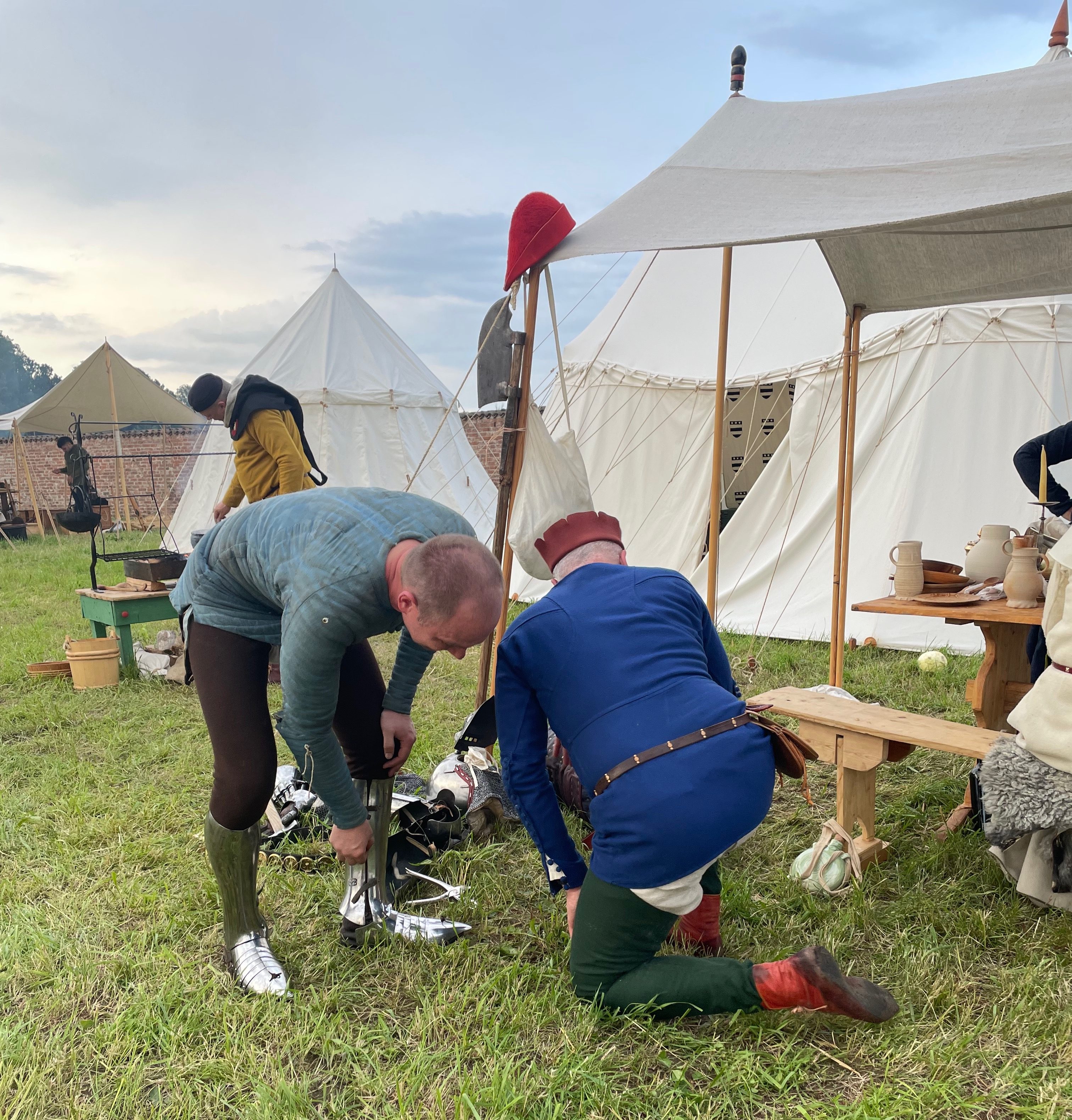
Getting dressed. Magnus is helping. Noted- check out the red face

Out on the battlefield, I stood in line and watched what was happening. This time, I had no unit to lead, so I had the opportunity to just be there and experience it. After a while, the lines began to approach each other. Everything felt familiar. The lines approach each other quickly at first and then more hesitantly as you begin to risk attacks from the other side. In different parts of the line, close combat begins with its thrusts. One or more see an opportunity and make a lunge, then retreat when the opposing side acts against them. I too go forward, thrust, parry, thrust, etc. The experience is the same as before, with one exception. After a very short battle, my body screams: BREATHE! What are you doing! Breathe! I needed to retreat back in the formation and give way to my body and let it recover.

After a while, my body recovered and I could once more join in the fighting. This time, it felt like my body rememberd that it had done this many times before, and the breathing needed, to get the body -pressed into the armour- to work, was working. Now it’s started to get really fun. The game of identifying what the opposing formation will do and finding gaps where I could step forward and strike a few blows began. Several fun combat sequences followed, with pauses as the formations manoeuvred. I got confirmation that my armour is worked well, as I have to admit that I got hit quite a bit myself.

Once I got going, it felt like the battle ended very quickly. I was pumped for the second and final battle of the event. It was a fairly hot day. During the battle, some of the opponents made an encirclement. I rushed to that flank and got the opportunity to engage in what was, for me, a very enjoyable battle. I got close to one of my opponents, who was wearing nice armour with a blue jupon. With my left hand, I grabbed his weapon and attacked him with my longsword in one hand, repeatedly striking him in the head. After a battle that felt eventful, but was certainly less than a minute long, my opponent was down on the ground. After this battle, which I enjoyed, my limitations became apparent in the next one. I clashed with another opponent. Initially, it was fairly even, but it became clear how poor my stamina is these days. In the end, I just had to open myself up to be cut down in front of the audience, much to their delight. A little later, I was able to sneak up and participate again.
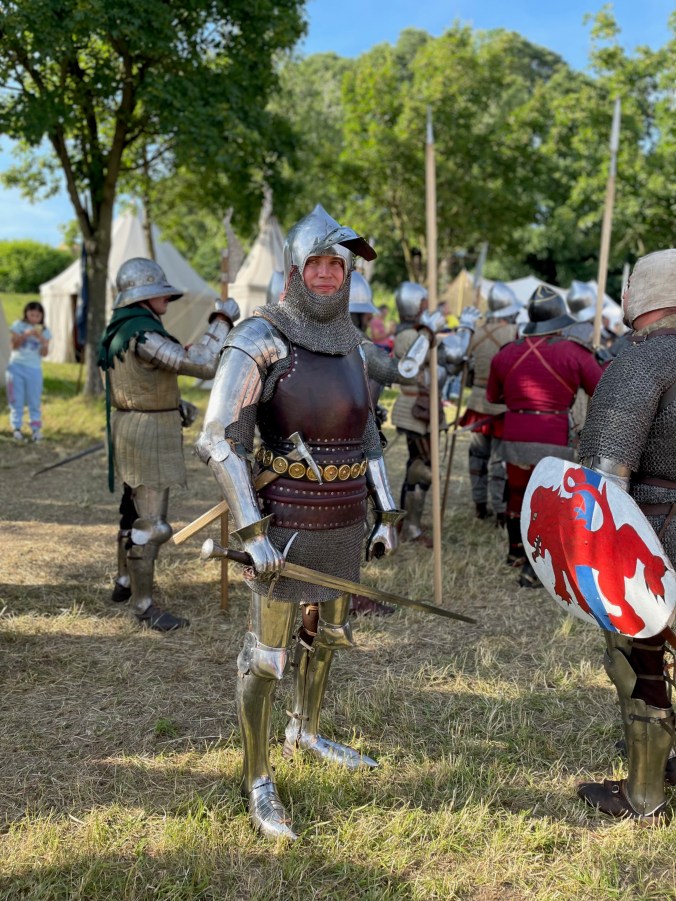
To battle!

What I took away from it was that it was incredibly fun. Afterwards, when I got home to a different environment, people asked me if it had been fun. The part where you sit together with friends, joking, drinking and eating good food, is easy to explain to a wider circle of people who are not involved in the kind of history-related activities, that involve wearing clothes from the period. However, the other part, which I personally find so damn fun, fighting with a sword in my hand, is more difficult to explain. What is so damn fun about it? What I have come to realise so far is that these types of activities make me feel completely in the moment and very alive. All focus goes to a chaotic present, where decisions must be made with immediate consequences. This business of being forced to make very quick decisions in a chaotic situation, based on incomplete information, is something I have always found enjoyable during military exercises. Before I continue, I just want to say that I hate war and the atrocities that occur in all wars. However, there are situations when practising something that arouses enthusiasm in me. And it is in situations where practising requires quick, immediate decisions. When sufficient training has been done, the decision comes immediately, like an instinct, when certain parameters that you recognise from before arise. The feeling when the impressions come in, are processed and then result in a decision that is implemented is something that captivates me. For me, it is the same feeling that comes when I have a sword in my hand. I think others can probably experience the same thing in a kayak on a rapid or when skydiving. It can certainly arise in various sports such as football, which I myself have never really understood the appeal of, but where you are faced with the same type of quick decision-making, which, when successful, arouses an inner euphoria.

I fully understand that to others who are not like me, I seem like a very strange person, an adult who enjoys fencing. But that’s how I am. I will continue to do what I do and think about why I enjoy it so much. Even though it gets a little harder every year.
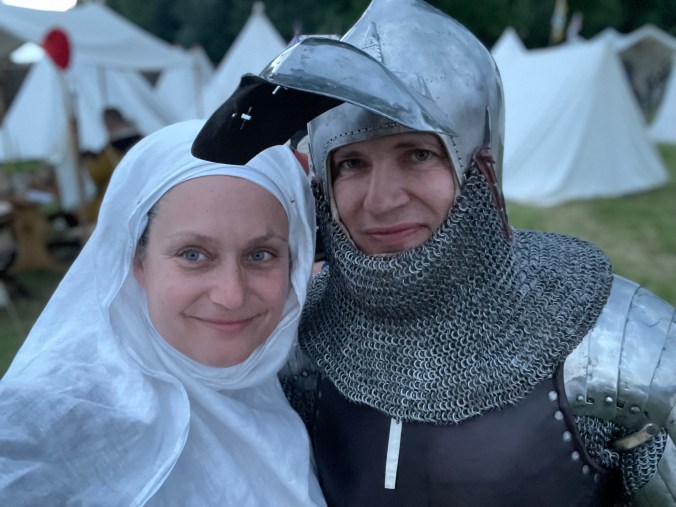
Wifey wanted a selfie with me

The photo shoot

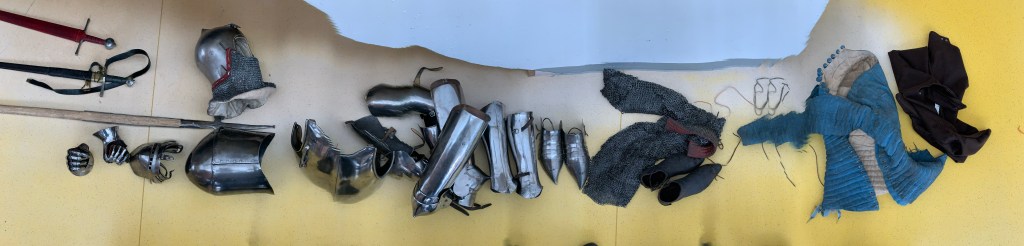
4 weeks ago I was part of a photo shoot for a blog post serie. When my fighting kit was spread out on the floor my wife took a photo of my things.

I thought the picture was fun and shows my things in a clear and educational way.
My ambition is to share my ideas and why I have choose the certain things I have in my armour kit. I guess it will take some time before I have posted blog posts about every single piece.
/ Thomas

Lining in mail coifs

Textile in the context of the Battle of Visby finds is a neglected subject. As Bengt Thordeman in his book Armour from the battle of Wisby 1361 from 1939, mainly was, as the title say, mostly interested in the armours, the focus were on the metallic remains and the textile remains connected to them were only addressed shortly. This post will address the textiles in the context of the lining of mail coifs.

A lot of traces of textile can be found on the iron finds from the mass graves. This post is written as a part in getting more attention to the textile part of armours. An article will also be written sometime in the future and the hope is that someone with competence on archeological textile will receive funds for a larger study.

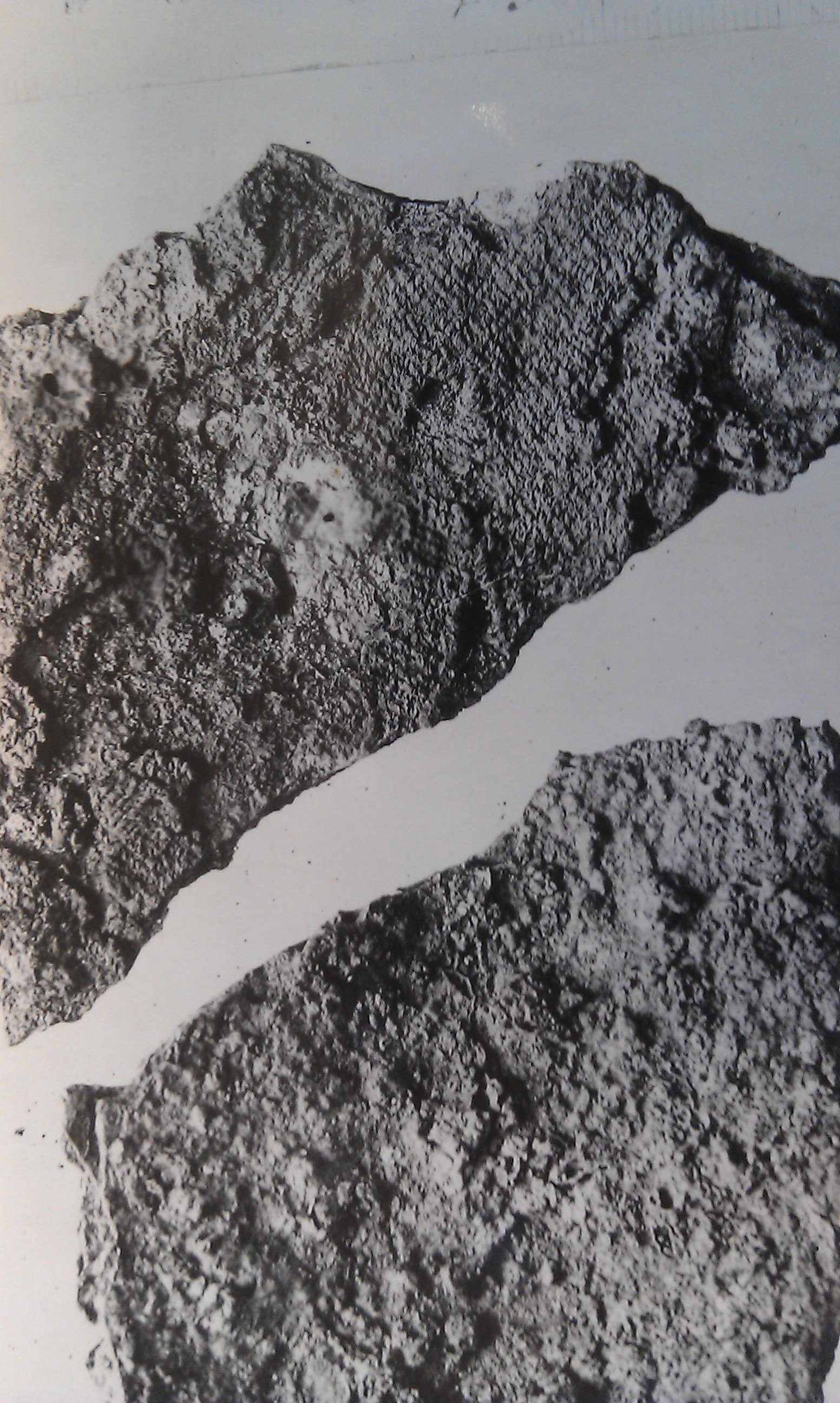
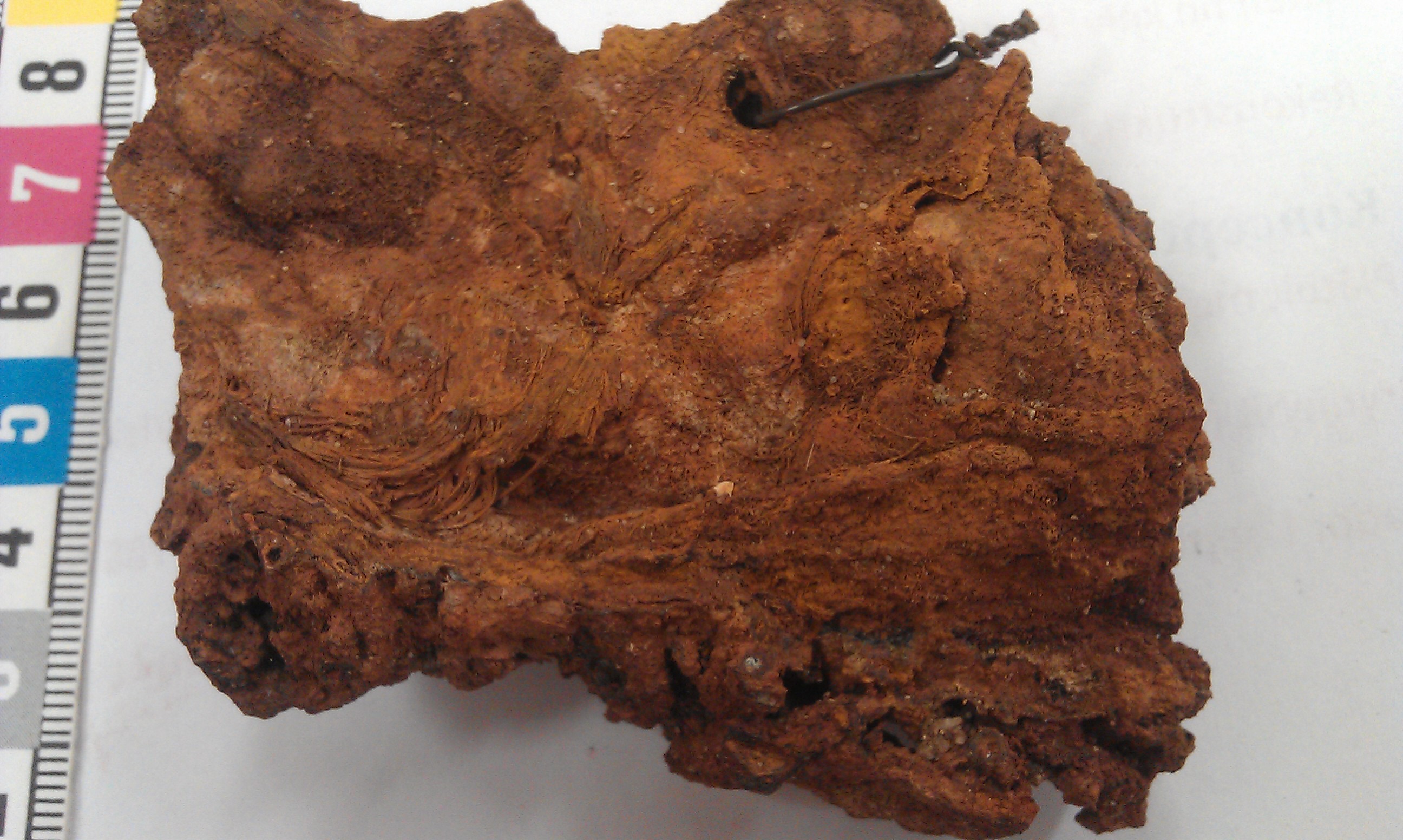
One of the best ways to preserve textiles in an archeological context is to have lots of metal close to the textiles. A thing that the mass graves have plenty of. Metal salt will pass from the metal onto the textile and over time create a metalized textile, kind of like a fossil. The textile is in fact gone but what is left is a piece of metal in the shape that the fabric once had. Very often in such good shape so threads can be counted, and weaving techniques can be identified. Such as an inprint of a twill pattern, very wooly in its look, on the outside of mail coifs. Most likely from the clothes on corpses that ended up in contact with the object in the dreadfully packed mass graves. So, the traces of textiles can tell us a lot of things about what kind of fabrics people wore during that summer day in 1361.

IMAG0352 2

Documentation photo from the excavations

IMAG0354

Documentation photo from the excavations

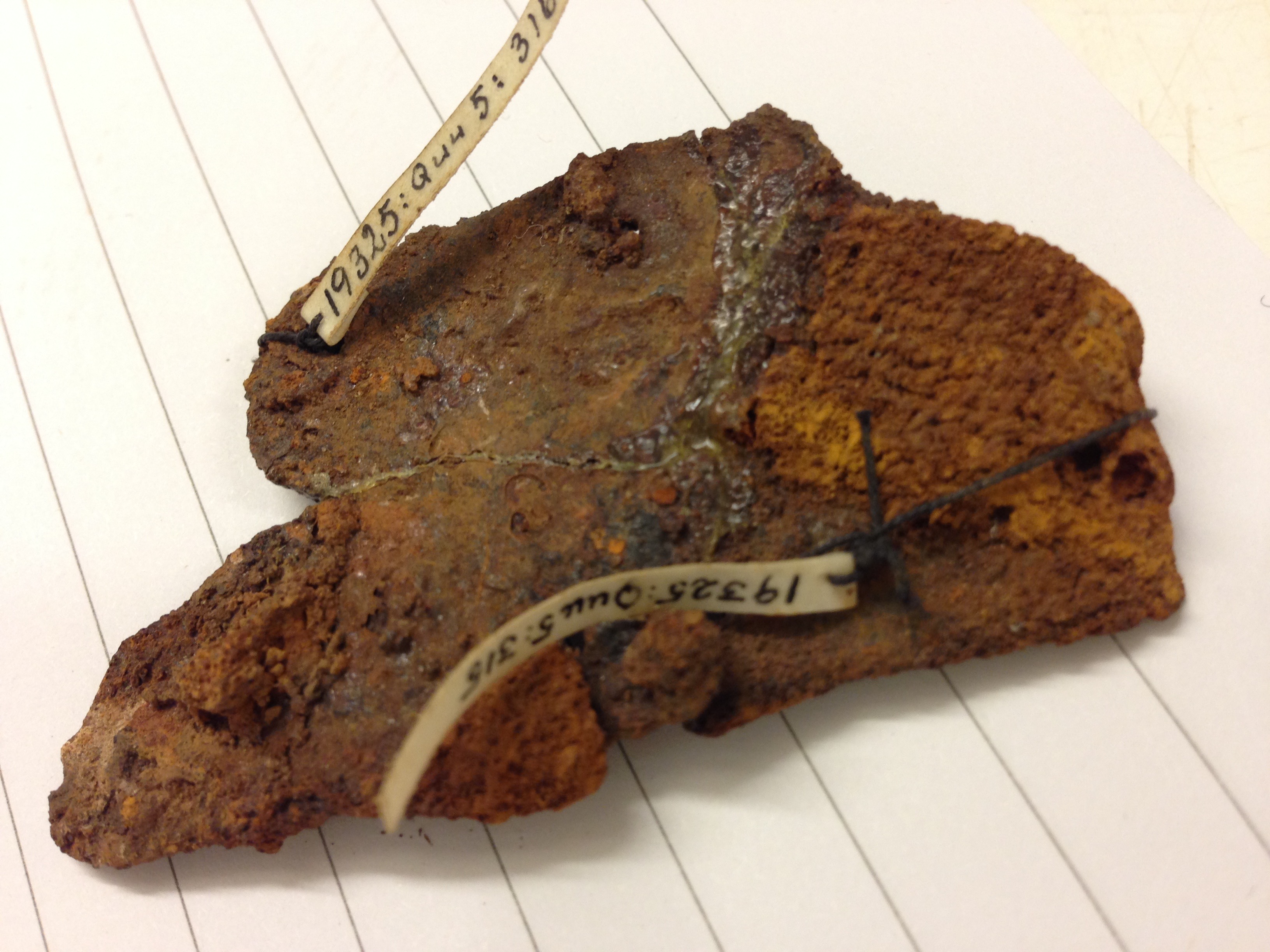
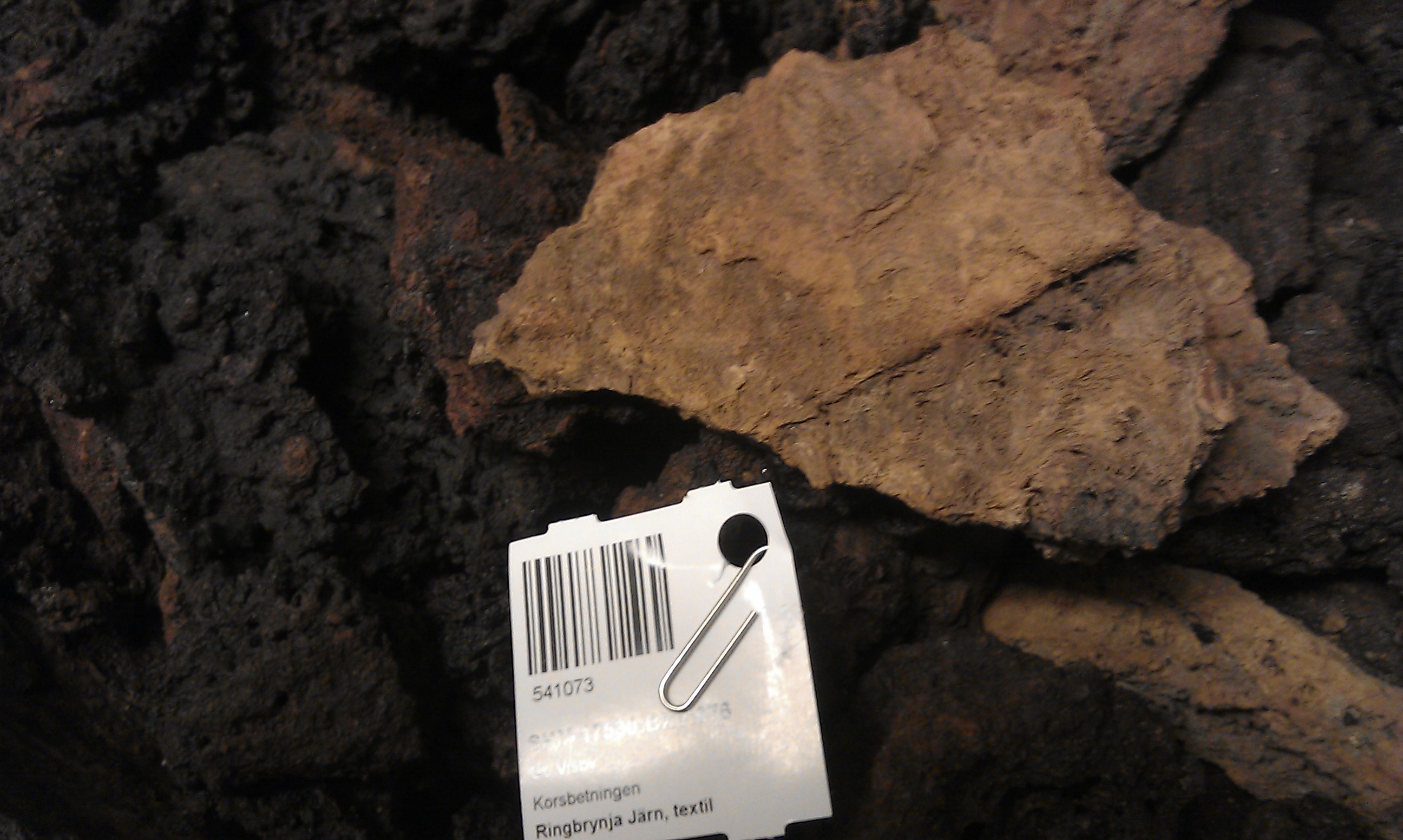
These remains of fabric is very fragile. Looking at the documentation photos from the excavation there is obvious that a lot disappears in the process of conservation. The metal was boiled in a mix of paraffin wax to stop the metal from degrading. The paraffin wax has preserved the objects, so that they still hold together today.  And pretty much textiles are still to be seen on the waxy surface. As the find material was huge, parts of the material never got conserved. These objects have often fallen apart in smaller pieces in their crates. These insignificant piles of ‘lumps’ does however contain more remains of the textiles. Remains that is very fragile and small pieces of fragments fall off every time the wooly shaped remain touches another object in the crate, such as by when moving the pieces. So, this material would really need documentation before it disappears forever.

bild

Textile on plate

Some of these remains are from lining on the inside of the mail coifs. When Tommy Hellman made his study in 1995 on ten mail coifs he observed:

“The fact that textile remains were also found in the hoods, which were not in immediate contact with the cranium, and in some cases appear to have been thrown loose in the grave, indicates that the lining was attached to the hood and did not consist of a separate, head-worn hood.”
“The fact that the hoods were lined in their entirety indicates several of the findings, in any case the lining has gone so far down that it protected the neck from contact with the chain mail.”
Hellman didn’t find any traces of additional filling and concluded that “the mail coifs of this type described here had a sewn-in lining, which in many cases consisted of a single layer of heavy fabric.”
(Text can be found here: It’s in Swedish.)

For me it is obvious that many of the mail coifs have been lined. I have looked in many crates in the deposit, lifting up looking at pieces with remains of lining on the inside of the mail. I will here present a couple of examples of lining.

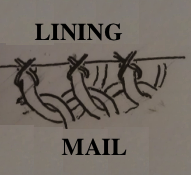
The un-conserved mail coif A11 have a lot of the lining preserved. This lining consists of 3 to 4 layers of plain weave. By analysing  the fragment in high magnification it could be concluded that the fabric was made from hair fibers, namely wool. It was also possible to observe a construction detail in the form of a gore that most likely was placed on the shoulder, at the place for the mail triangle described in the post Construction of mail coif with square collar.  (A piece from A11 could also be found here, on the homepage for the Battle of Visby exhibition in Stockholm)

IMAG0119

Inside of mail coif A11 with several layers of fabric, as well as hair from the fallen.

Looking thru the crates I found a very interesting piece lying on the top of a pile ofbroken mail coifs pieces. This piece was partly covered by a lining and it was evident that it was the edge of the lining. Most likely this lining didn’t cover the whole collar and it was even possible to see the type of stitches used to fasten the lining to the iron mail.

IMAG0220

Lining on part of a piece from a mail coif

Namnlös

Sketch of the stitches

These examples demonstrate what kind of information could be gained by studying the objects with a textile perspective. Hopefully this will be subject for further studies in the future.


Construction of mail coif with square collar

In the mass graves from the battle of Visby in 1361 about 185 mail coifs been excavated. Some is pretty well preserved, while most of them have disintegrated a lot, into smaller pieces, making it laborious to study them.

Since Bengt Thordeman study in the 1930s which was publiched in 1939 in the well renown book Armour from the battle of Wisby 1361, little research have been done on the findings. Tommy Hellman made a study in 1995 on ten mail coifs. Hellman wrote: 

”I wanted to know more about the mail coifs and my examination did not disappoint me. Inside some of the coifs I found traces of linen, most probably rests of the lining I was looking for. The coifs that could be typologically determined turned out to be of similar type, having no ventail (a partly loose flap of mail to protect the chin and mouth). The lower parts of the coifs consisted of two square or rectangular flaps of mail protecting the upper part of the breast and back respectively. This kind of coif can be seen in European art mainly from the latter half of the l3th and the beginning of the l4th century.”

Tommy’s article can be found here, it’s in Swedish, but hopefully you can use a translator service if ypu don’t understand Swedish. .

Hellman was able to identify that the mail coifs that was complete enough to study the construction had a square collar. However, as these coifs are corroded and have been preserved with the help of a paraffin wax, they are hard lumps, which makes it hard to study details in the construction. There is however another mail coif from Gotland that’s very well preserved. The coif from the church of Tofta, that was found during an attic cleaning in 2004. Since it had sometimes been thrown after pigeons to scare them away, it had not rusted together completely to a lump. This coif has been dated by a string of leather still remaining on the coif to mid 13th century. This string is the remains of the strings used to fix the hood on the head. In its current state it weighs 1.1 kg. It is made of alternating rows of solid and riveted flat rings. The material has been shown by analysis to be tough partly phosphorus-containing iron. (Based on the report from the conservation made by ACTA in Stockholm). ACTA hava a number of pictures from the conservation. Look here.

Construction

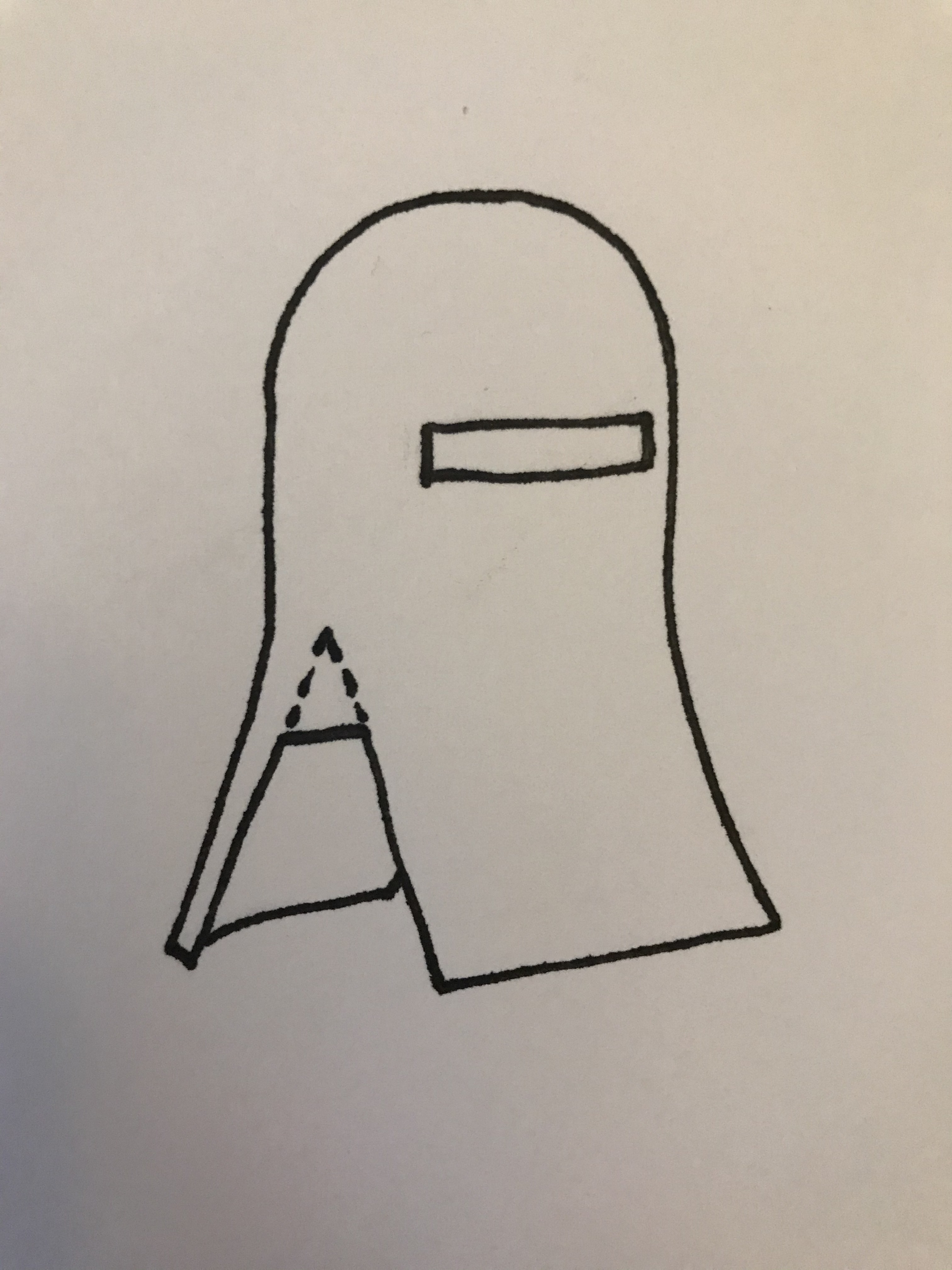
The construction of these hood is very simple. From the spherical top, it is just a tube. The face opening is created by a couple of rows are omitted. This simple solution works very well with the adjustable mail. When put on the mail form an oval opening around the face. The mail falls in under the chin making a pretty tight fit. The collar is made with just slits at the shoulder with a small wedge. 

Niclas Vennström made a reconstruction of a mail coif inspired from the finds from Visby to the exhibition “Medieval Massacre – the Battle of Gotland 1361” at Swedish History museum. 
Here are some poor pictures of me trying it out. 

/ Thomas

Why a blog?

Welcome to my blog! I have not been blogging before, but I’m looking forward to start. The plans for me is to blog about the things around the subjects history, crafts and warfare. Why? Simply because they are things that interests me and I also want to keep track on progress on my reenactment equipment. But also to use the blog as a space to publish things that I find during research, that I think might interest people. 

My main focus is the late 14th century and early 15th century. Vicke van Vitzen is the nobelman that my armour is inspired from.

When I’m not a nerd, doing crafts, I’m a Phd student in medieval history at Stockholm University.

Hope you might find the blog interesting.
/ Thomas